Pinotage
pee-noh-TAHZH · Vitis vinifera ‘Pinotage’ · also “Perold’s Hermitage”
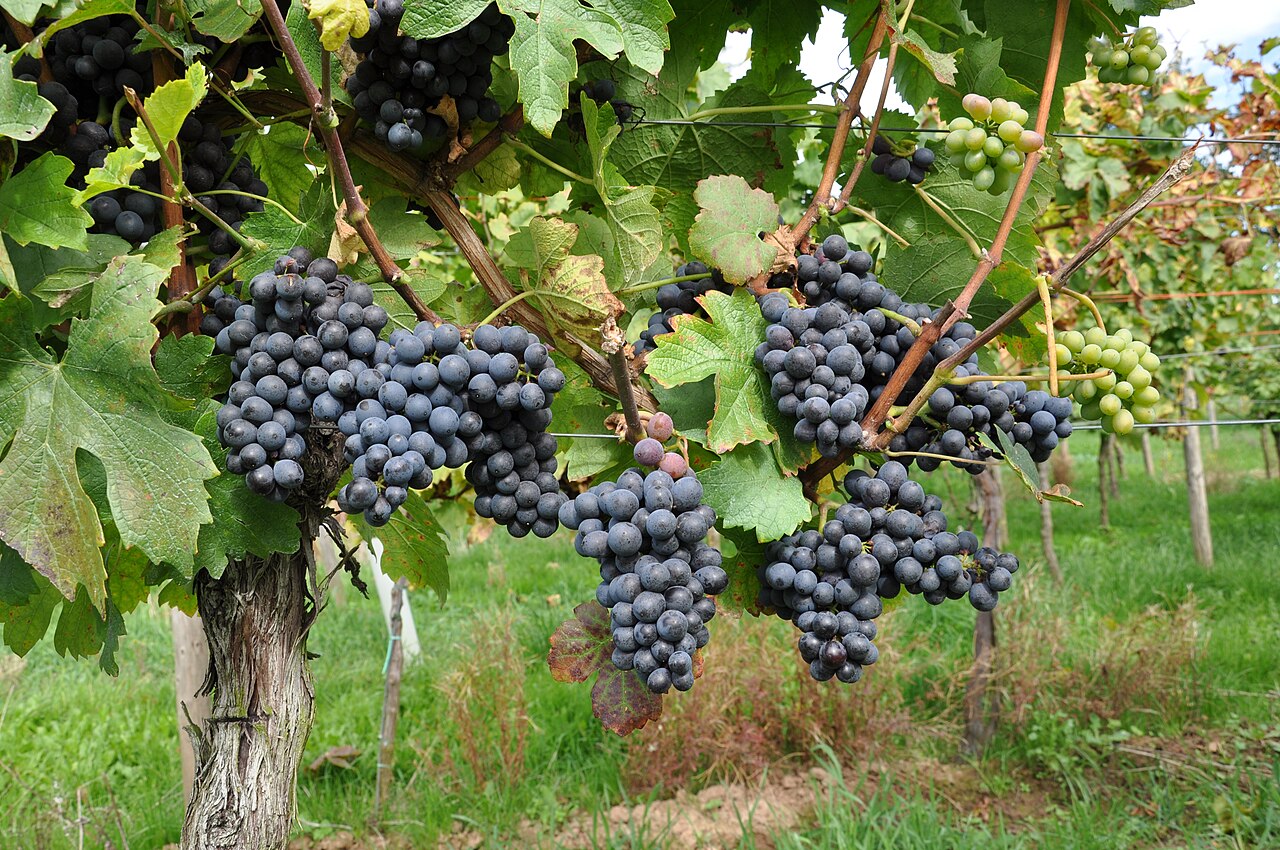
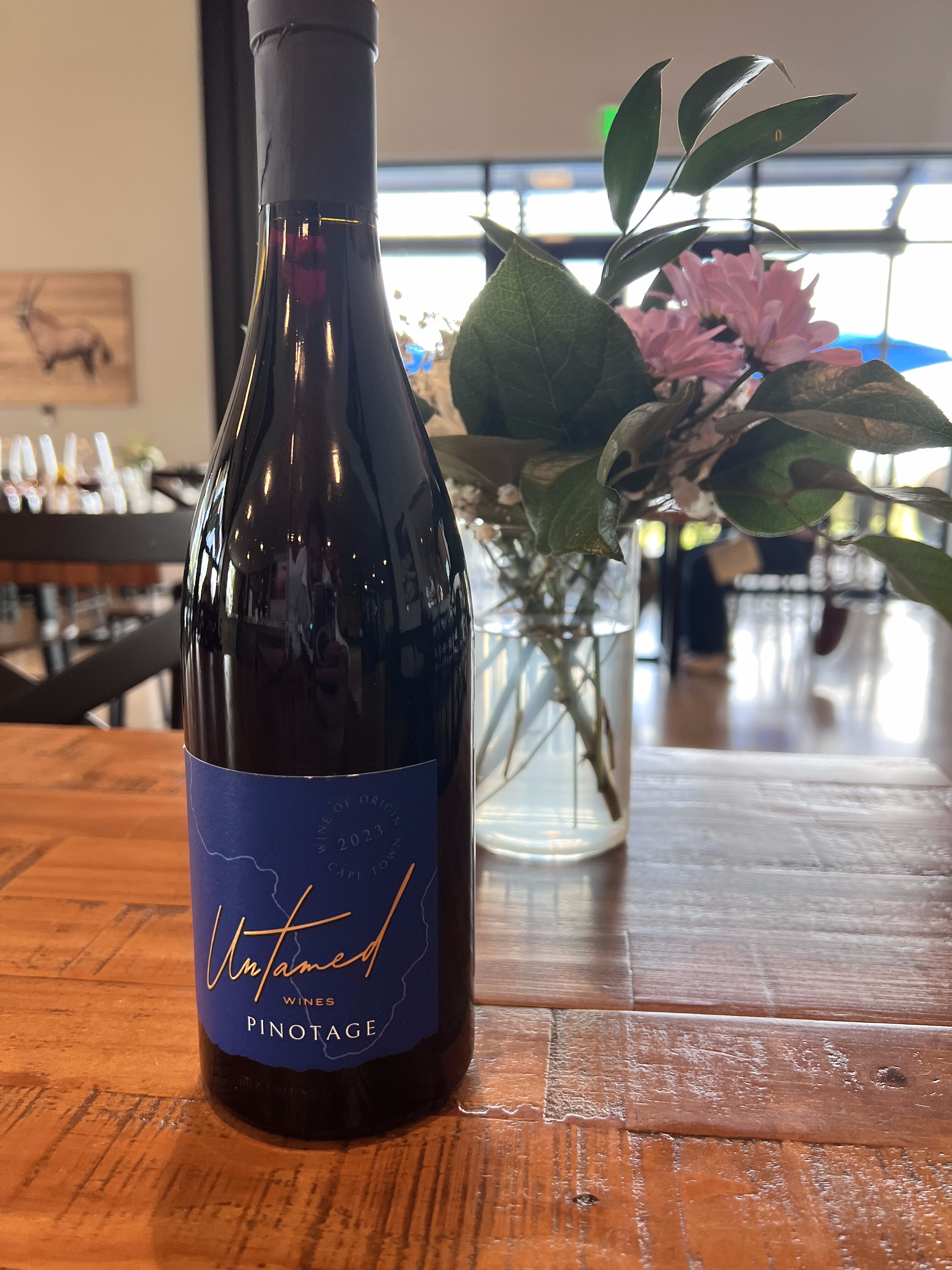
South Africa’s own grape — a 1925 crossing of Pinot Noir and Cinsaut. It keeps Pinot’s lighter frame and adds a smoky, savory streak all its own. Rare in Texas; the one we met was poured, and explained, by hand.
/ What it tastes like /
Red plum, blackberry, and dark cherry, with the signature riding on top: a smoky, savory streak that the Untamed pour’s host summed up as smoked bacon — sometimes read as tar, woodsmoke, or sweet spice. From its Pinot Noir parent it takes a lighter frame than a big Syrah, but the fruit runs darker and the grip is firmer than Pinot. (Rushed, cheaply made versions can throw a banana or acetone note; the good ones don’t, and it’s worth knowing that’s a flaw, not the grape.)
/ Why it works in Texas /
Pinotage is a South African invention and stays genuinely rare here — the bottle we met was South African–born, not Texas-grown. But its Cinsaut parent is one of the most heat- and drought-tolerant grapes there is, and Cinsaut already grows well in Texas. So the raw toughness that lets Pinotage handle a hot, dry season is exactly the kind of pedigree Texas rewards. Whether more of it goes in the ground here is an open question; the heat resume is not.
/ What to eat with it /
The smoky, savory side wants smoke and fat back. At Untamed the pairing was the wood-fired meat-lover’s pizza, and that’s the right instinct — barbecue, grilled sausage, a charred burger, lamb chops, anything that spent time over a wood fire. In South Africa it lands on the braai, which is the same idea in a different accent.
/ From our visits /