Texas High Plains
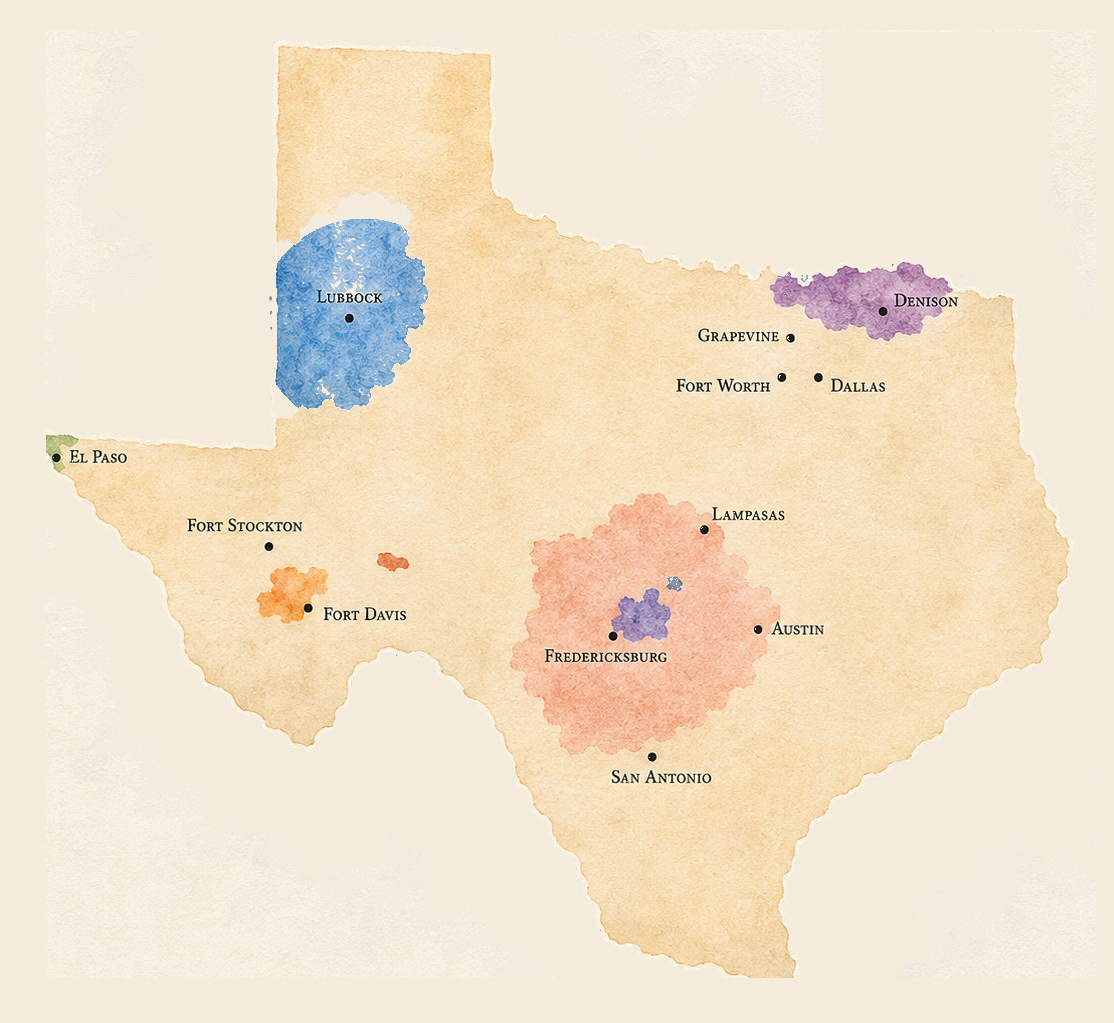
The engine of Texas wine — most of the grapes are grown up here.
You can taste a lot of Texas wine without ever visiting the High Plains, because this is where most of it is grown rather than where most of it is poured. A bottle labeled Hill Country often started as fruit from up here.
- Established
- 1993
- Counties
- 24
- Elevation
- 3,000–4,000 ft
- Acres
- 8,000,000
- Soil
- Sandy loam over caliche
- Climate
- Dry, high-elevation; wide diurnal swing
About the region
The Texas High Plains AVA sits on the semi-arid plains around Lubbock, far from the Hill Country tasting-room scene. It is the agricultural heart of the industry: roughly 80% of the state’s wine grapes are grown here, then shipped south to wineries across Texas.
History
Broad overviewThe AVA was established in 1993. Its rise tracks the growth of Texas wine generally — as Hill Country tasting rooms multiplied, the High Plains became the vineyard base that supplied them.
Geography & climate
Broad overviewHigh elevation is the whole story: roughly 3,000 to 4,000 feet, with sandy loam over caliche and a dry climate that swings widely between hot days and cool nights. That wide diurnal swing preserves acidity in the fruit. Tempranillo, Cabernet Sauvignon, Chardonnay, Sangiovese, and Roussanne are all grown at scale.
Grapes & what it’s known for
Best known for: Tempranillo, Cabernet Sauvignon, Chardonnay, Supplying the rest of Texas.
This is primarily a growing region rather than a tasting-room destination; firsthand visit reporting is still pending.
Visited by Wines of Texas
We haven’t visited a winery in Texas High Plains yet — they’re on the way.
Wineries we haven't visited yet (37)
On the TABC roster for this region, but not yet visited. Own or represent one? Open its page and invite us out.
AVA assignments may include Wines of Texas editorial mapping where TABC permit data does not specify an AVA.